Handbook: Composting crop residues with microbial inoculants
A 40-day hot composting protocol turning rice straw, maize stalks and coffee husk into quality organic fertiliser: C/N balance, moisture and temperature control, turning schedule and maturity indicators.

Every season, Vietnamese farms generate large volumes of crop residues — rice straw, maize stalks, rice husk, coffee husk and bagasse. Most of it is still burned in the field, polluting the air, releasing greenhouse gases and wasting a valuable source of soil organic matter. Composting with microbial inoculants is a simple, low-cost way to turn those residues into fertiliser for the next crop.
Technical principles
Decomposer microorganisms work best at a carbon-to-nitrogen ratio of about 25–30:1. Straw and husks are carbon-rich but nitrogen-poor, so they must be combined with nitrogen-rich materials such as animal manure or legume residues — roughly 70–80% dry residues to 20–30% manure by volume. Moisture should stay at 50–60%: a handful squeezed firmly should feel damp without dripping. The heap must never be compacted, as hot composting requires oxygen.
The 40-day hot composting process
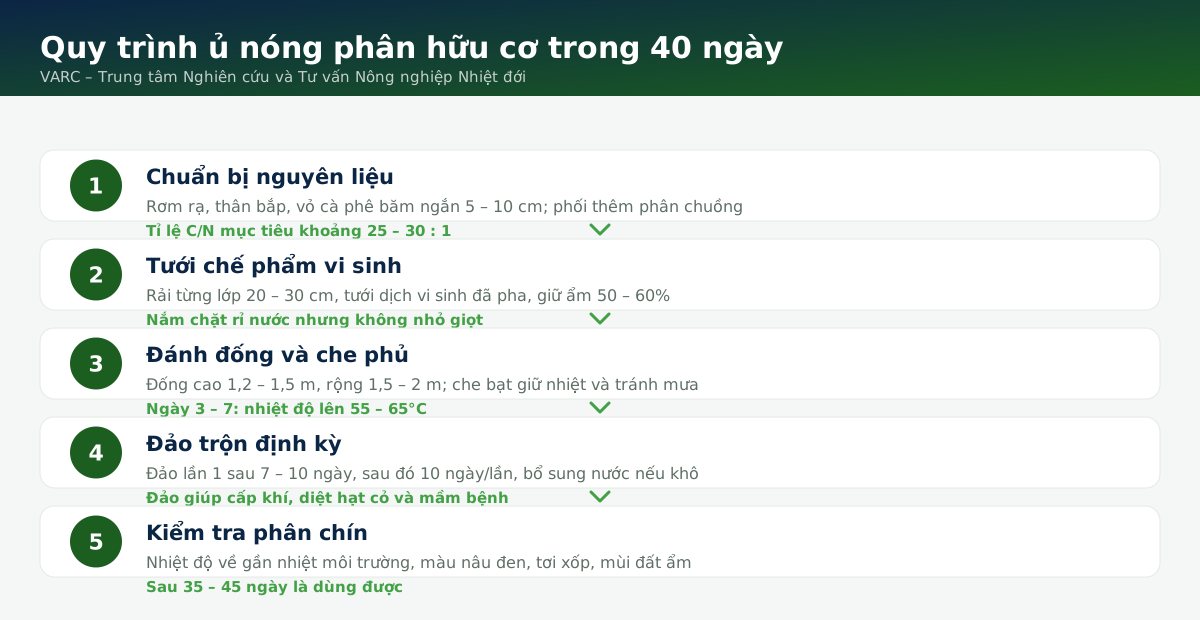
Chop residues to 5–10 cm, then build the heap in 20–30 cm layers, sprinkling manure and diluted inoculant between layers. A heap 1.2–1.5 m high and 1.5–2 m wide retains heat properly. Cover with a tarpaulin. Between days 3 and 7 the core typically reaches 55–65°C, which kills most weed seeds, larvae and pathogens. Turn the heap after 7–10 days and then roughly every 10 days, adding water if the material dries out. After 35–45 days the compost is mature: the temperature falls close to ambient, the material is dark brown, crumbly and smells of damp earth.
Common mistakes
Heaps smaller than one cubic metre cannot hold heat; over-compaction turns the pile anaerobic and smelly; excess water leaches nutrients; skipping turning leaves the outer layer undecomposed; and immature compost applied to crops can burn roots and spread disease.
Using the finished compost
Fruit trees: 10–20 kg per tree per year in two applications. Vegetables: 1–2 tonnes per 1,000 m² as a basal dressing. Rice: incorporate during land preparation. Combining compost with a microbial soil drench helps maintain beneficial populations across seasons.
VARC works with cooperatives and businesses to establish group-scale composting models, transfer the protocol and monitor compost quality against measurable indicators.