Handbook: Microbial treatment of livestock wastewater at household scale
A five-stage treatment train — solid separation, biogas digester, settling tank and microbial pond — with dosing guidance, daily operation routines and the parameters to monitor for regulatory compliance.

Household and small-farm livestock production is a vital rural livelihood, but it generates wastewater rich in organic matter, nitrogen and phosphorus. Discharged untreated, it causes eutrophication, odour nuisance and public health risks. A microbial treatment train combined with simple structures delivers effective treatment at a cost that suits household scale.
Reduce the load first
The most common mistake is flushing all manure into the system with wash water. Collecting dry manure daily before washing can cut the incoming pollution load by 40–60% while producing valuable feedstock for composting.
Five-stage treatment train
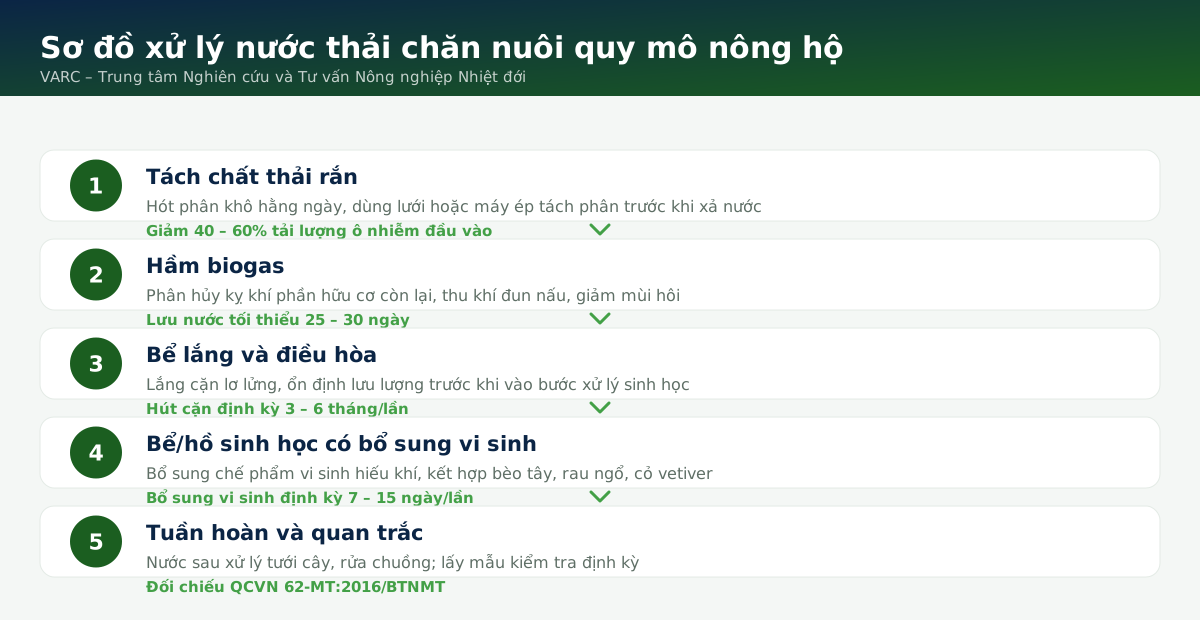
1. Solid separation — daily dry collection, or a screen/screw press on larger farms. 2. Biogas digester — anaerobic digestion of dissolved organics, producing cooking gas and cutting odour; aim for at least 25–30 days hydraulic retention. 3. Settling and equalisation tank — removes suspended solids and stabilises flow; desludge every 3–6 months. 4. Microbial pond or tank — dose aerobic inoculant every 7–15 days, add aeration where possible, and grow water hyacinth, water mimosa or vetiver to absorb residual nutrients. 5. Reuse and monitoring — treated water can irrigate crops or wash yards; sample periodically and compare against QCVN 62-MT:2016/BTNMT, the national technical regulation on livestock wastewater, confirming the version in force with local authorities.
Daily operation
Collect dry manure before washing; avoid discharging disinfectants straight into the system; inspect digester valves and pipes weekly; and watch the pond — black water with a rotten-egg smell signals overload, requiring reduced flow and additional inoculant.
Monitoring and economics
Track pH weekly, and COD, BOD₅, total nitrogen, total phosphorus and TSS every three to six months. Most of the cost is the one-off digester and settling tank; annual operating costs are mainly inoculant and desludging. In return, farms gain odour control, cooking gas and compost feedstock.
VARC provides site assessment, sizing based on herd numbers, operating procedure design and effluent quality control for households, cooperatives and enterprises.