Handbook: Propagating indigenous microorganisms (IMO) at farm level
A step-by-step guide for farmers to collect and propagate indigenous microorganisms on farm: materials, the five-step process, how to tell a good batch from a failed one, and application rates for different crops.

Indigenous Microorganisms (IMO) are beneficial microbial communities collected from the farm environment itself and then propagated using locally available materials. This approach gives farming households an affordable, self-reliant source of microbial inoculant that is already adapted to local soil and climate conditions.
Why propagate your own inoculant?
Long-term intensive farming with heavy agrochemical use depletes beneficial soil microorganisms, leading to compacted soils, poor water retention and growing dependence on external inputs. Restoring soil biology is the first step towards regeneration. Compared with commercial products, on-farm propagation is far cheaper per cubic metre of solution, uses strains already adapted to local conditions, and lets farmers decide when to apply.
The five-step process
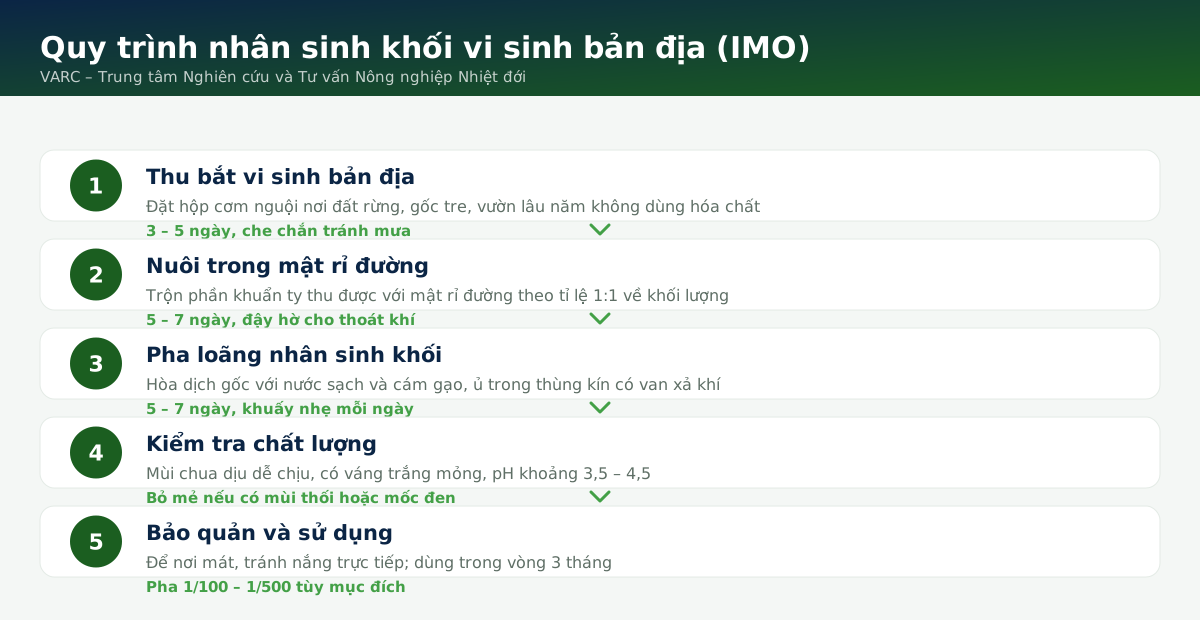
- Collection — place cooked rice in a ventilated box under leaf litter in soil that has been free of agrochemicals for years; harvest after 3–5 days when white mycelium covers the surface.
- Culturing in molasses — mix the mycelium with molasses at a 1:1 weight ratio; ferment 5–7 days to obtain the mother culture.
- Propagation — dilute the mother culture with clean, chlorine-free water and rice bran in a vented container; stir gently once a day for 5–7 days.
- Quality check — a good batch smells mildly sour, shows a thin white film and reads pH 3.5–4.5. Discard any batch with a putrid smell or thick black mould.
- Storage and use — keep in a cool, shaded place, never fully sealed, and use within three months.
Application rates
Soil drench 1/200–1/500 every 10–15 days; composting 1/50–1/100 applied while building the heap; odour control in animal housing 1/100–1/200 two to three times a week; foliar spray 1/500–1/1000 every 7–10 days, applied in the cool hours.
Key precautions
Never mix with fungicides, disinfectants or chlorinated water. Apply early morning or late afternoon. Correct very dry or strongly acidic soils before inoculation. Keep a simple logbook for every batch — it is the basis for selecting the best local strains over time.
VARC supports cooperatives and farmer groups in selecting indigenous strains, assessing batch quality and designing protocols suited to each crop and agro-ecological zone.